
How to Fix a Washing Machine Not Draining? 7 Most Common Causes and
How to Fix Each One
Washing machine not draining? We cover the 7 most common causes and how to fix each one — plus when repair costs more than replacing your washer.
- In This Article
- Clogged Drain Hose
- Blocked Pump Filter
- Broken Lid Switch
- Drain Pump Failure
- Clogged Impeller
- Unbalanced Load
- Control Board Fault
- Diagnosis Table
- Repair vs. Replace
- FAQ
A washing machine that won’t drain is almost always caused by one of seven fixable problems: a clogged drain hose, a blocked pump filter, a failed drain pump, a faulty lid switch, an overloaded machine, a kinked drain hose, or an unbalanced load. Most of these take under 30 minutes to diagnose at home. If the fix doesn’t hold or your machine is aging a used or scratch-and-dent washer from Appliance Worlds costs 40–70% below retail and comes with a 90-day warranty.
You open the lid and the drum is still sitting in a pool of soapy water. Nothing is spinning out. Your washing machine is not draining; and every minute it stays that way, your clothes are soaking in dirty rinse water. Before you call a repairman or replace the machine, check these seven causes. Most are DIY fixes that cost nothing or next to nothing.
This guide covers every likely cause, how to test each one, and what to do if the repair doesn’t hold. If you’re in the Richmond or Ashland, VA area and the machine is simply done, we carry fully inspected used and scratch-and-dent washers with same-week delivery.
Recent Posts

1. Clogged Drain Hose
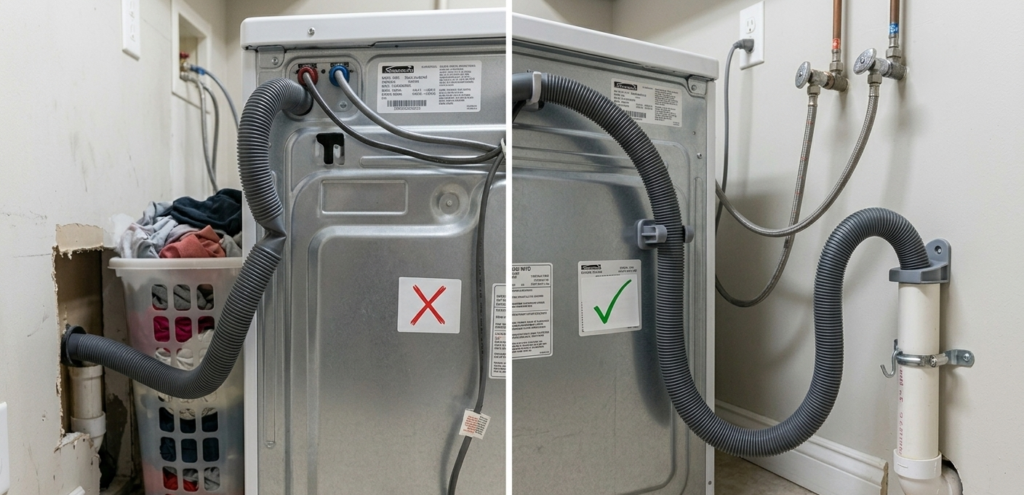
The drain hose runs from the back of your washer to a standpipe, sink, or floor drain. If it’s kinked, compressed behind the machine, or packed with lint and debris, water has nowhere to go. Pull the washer away from the wall and inspect the full length of the hose. A sharp bend or flattened section is enough to block flow completely.
Give yourself 12–18 inches of clearance to inspect the hose without straining it further.
Run your hand along the entire hose. Any section that’s bent tighter than a 90-degree angle can restrict flow enough to stop drainage.
Place the loose end in a bucket and run water through it. A partial block will show up as reduced flow. A full block means no water passes through at all.
Note on hose height
- The drain hose standpipe height matters: it should sit 34–96 inches from the floor.
- Too low and water siphons back into the drum continuously; it will appear as though the machine never drains.
- This is a common misdiagnosis on front-load machines.
Blocked Pump Filter (Coin Trap)

Top-load washers:
Most don’t have an accessible filter in the same location. The lint trap is often built into the agitator or around the drum rim. Check your model’s manual if you’re unsure.
Most modern front-load washers have a debris filter. often called a coin trap or pump filter; positioned at the bottom front of the machine behind a small access door. Coins, hair, lint, and small items collect here over time. When it fills up, water backs up into the drum and the machine stops draining.
It’s usually a small rectangular or circular panel. On some models it’s behind a kick plate you pop off with a flathead screwdriver.
The filter holds residual water. You’ll get a cup or two when you unscrew it, sometimes more.
Rinse under a tap. Check the filter housing for anything left behind; coins are notorious for sitting just past the filter itself.
Shop Inspected Front-Load Washers from $295
All drain pumps & filters verified before listing · 90-day warranty
Browse Front Load Washers →Failed Drain Pump
The drain pump is the component that actively moves water from the drum out through the hose. When it fails, seized motor, broken impeller, or electrical fault, the machine fills and washes normally but water stays put at the end of the cycle.
Signs of a failed pump beyond standing water include a loud grinding or humming noise during the drain phase, or no noise at all when the drain cycle should be running. On machines with a diagnostic mode (most Samsung, LG, and Whirlpool models built after 2015), a fault code will display: common codes are 5E / SE on Samsung, OE on LG, and F21 on Whirlpool.
- Samsung: 5E or SE; drain motor failure or blocked filter
- LG: OE; drainage issue, start with filter then pump
- Whirlpool / Maytag: F21; long drain time, usually pump or clog
- GE: E23 or E31; drain pump fault
- Electrolux: E21; water not pumped out in time
Replacing a drain pump costs $25–$80 for the part, plus 1–2 hours of disassembly depending on the brand. On machines over 8 years old, compare the repair cost against the price of a used replacement washer. At Appliance Worlds, drain pump function is one of the items confirmed on every unit before it reaches the showroom floor.
Faulty Lid Switch or Door Latch
Top-load washers won’t spin or drain if the lid switch; the safety sensor that confirms the lid is closed, is broken or stuck. The machine reads an open lid and stops the cycle before the drain phase. Front-load machines use a door latch with an electronic lock sensor that serves the same function.
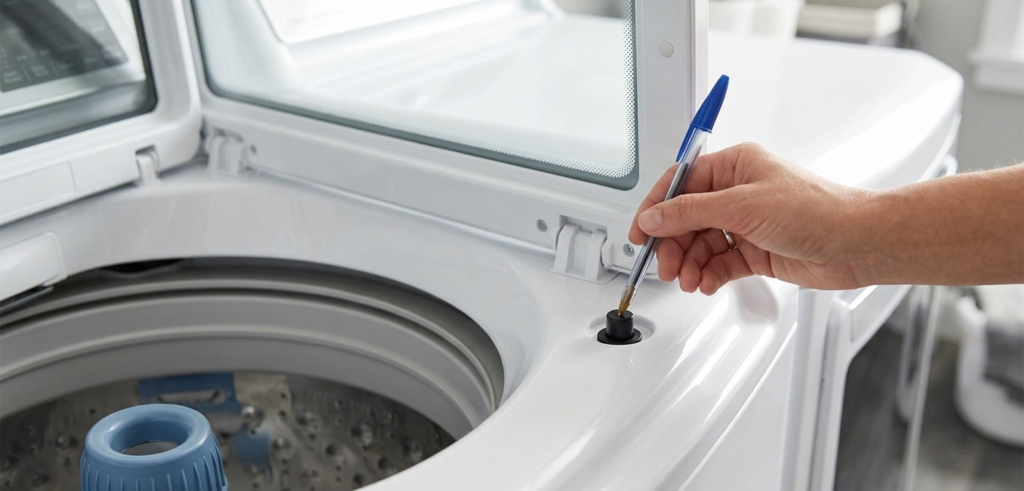
Test this quickly: close the lid firmly and listen for a click. On most top-loaders, pressing the lid switch manually with a pen while the machine is running will let the cycle continue if the switch is the problem. If it does continue, the switch is faulty and needs replacement; typically a $15–$30 part.
Overloaded Drum
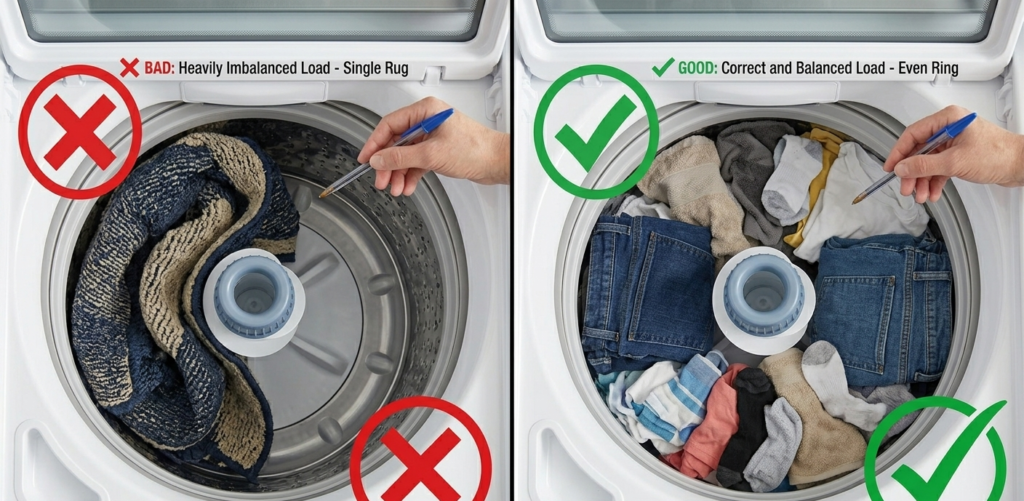
An overloaded drum restricts the machine’s ability to spin up to the RPM needed for effective drainage. Modern washers detect imbalance and reduce spin speed automatically as a protection measure; sometimes stopping the spin-drain sequence entirely. If clothes are packed above the drum’s fill line or the machine shakes violently during spin, overloading is the likely cause.
Remove roughly a quarter of the load, redistribute the remaining items evenly, and run a drain-and-spin cycle. If that resolves it, your machine is working correctly, it’s the load size that needs adjusting.
Top-load capacity guide
- 3.5–4.5 cu ft: 12–16 lbs of laundry
- 4.5–5.0 cu ft: 16–20 lbs
- 5.0+ cu ft: 20–25 lbs
- Never pack above the agitator
Front-load capacity guide
- 4.0–4.5 cu ft: 15–18 lbs
- 4.5–5.0 cu ft: 18–22 lbs
- 5.0+ cu ft: up to 25 lbs
- Fill to 75–80% of drum volume
Worn or Broken Drive Belt
Older top-load and some front-load machines use a drive belt to transfer motor power to the pump. A worn, cracked, or snapped belt means the pump doesn’t turn even when the motor runs. You’ll hear the motor running during the drain phase but see no water movement. Accessing the belt typically requires removing the back or front panel of the machine depending on the model.
Belt replacement costs $5–$20 for the part. It’s a straightforward repair on most machines, but if you’re finding multiple wear points on an older machine, that’s often a signal the machine is at end-of-life rather than worth further repair investment. If you’re in the Richmond area and making that call, our scratch-and-dent washers start from $195 with warranty.
Control Board or Timer Fault
If you’ve cleared the filter, confirmed the hose is clear, and the pump runs without moving water, the issue may be in the control board; the electronic brain that sequences the wash, rinse, and drain cycles. A failed relay or burnt component on the board can cause the drain phase to be skipped entirely despite the pump being functional.
Control board replacement on major brands runs $100–$300 for the part, plus labor. At that price point, compare it carefully against your machine’s age and what a replacement would cost. For Richmond and Ashland homeowners, a used washer at Appliance Worlds in the same capacity range often costs less than the board repair alone.
Need a Replacement? Shop Inspected Washers in Richmond, VA
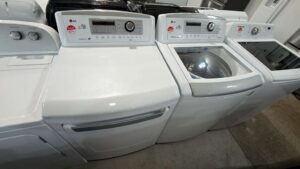
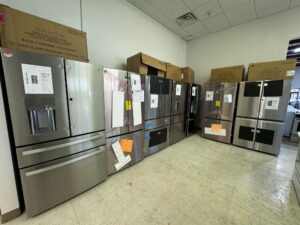
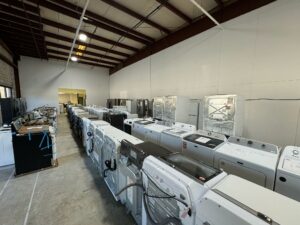
When a repair isn’t worth the cost, these are some of the washers currently in our Ashland and Highland Springs inventory; all drain-tested before listing, with 90-day warranty and same-week delivery across Richmond, Mechanicsville, Midlothian, and Fredericksburg.
Browse the full selection: Top Load Washers · Front Load Washers · Washer & Dryer Sets. Inventory changes daily; call (804) 940-3043 to confirm a unit is still available before visiting.
Dryer Set
Replace both at once — sets from $495
Used & scratch-and-dent washer & dryer pairs · Stackable options available
Browse Sets →Repair or Replace? A Quick Decision Guide
- Machine is under 5 years old
- Repair cost is under $150
- Single component failure (filter, belt, lid switch)
- Machine is a reliable brand with parts available
- Machine is 8+ years old
- Repair cost exceeds $200–$300
- Control board or motor failure
- Multiple components failing in sequence
If replacing makes more sense, used and scratch-and-dent washers at Appliance Worlds give you a brand-name machine; Whirlpool, LG, Samsung, Maytag, GE; at 40 to 60 percent below what a new unit would cost at a big-box store, with a 90-day warranty included. We cover delivery and installation across Richmond, Ashland, Hanover County, Mechanicsville, Midlothian, and Fredericksburg.
Note:
If you are weighing repair vs replace and want a realistic quote on what a replacement used washer would cost, call us at (804) 940-3043 or WhatsApp. We can tell you exactly what is in stock at our Ashland showroom right now and what delivery would cost to your address.
Quick Diagnosis Guide
| Symptom | Most Likely Cause | Difficulty |
| Water sitting in drum, no noise during drain | Clogged drain hose or pump filter | Easy |
| Humming noise during drain but no water movement | Foreign object in pump impeller | Moderate |
| No noise at all during drain phase | Drain pump motor failure | Moderate |
| Machine washes but will not spin or drain | Lid switch or door latch | Easy |
| Machine pauses before spin, clothes still wet | Unbalanced load | Very easy |
| Error code displayed and cycle paused | Door latch, pump filter or control fault | Easy to moderate |
| Machine worked after hard reset but fault returned | Control board fault | Professional diagnosis |
Frequently Asked Questions
Why is my washing machine not draining but still spinning?
If the machine spins but doesn’t drain, the motor and drum are working; the problem is specifically in the drain path. Start with the pump filter (on front-loaders, behind the small access door at the bottom). A partially blocked filter lets the drum spin but restricts water flow enough to prevent full drainage. If the filter is clear, check the drain hose for kinks and then the pump itself.
Why is there standing water at the bottom of my washing machine?
Standing water means the drain cycle didn’t complete. The most common causes in order of frequency: blocked pump filter, kinked or clogged drain hose, failed drain pump, and faulty lid switch or door latch. If you see an error code on the display, look it up for your brand; codes like F21 (Whirlpool/Maytag), OE (LG), or 5E (Samsung) point directly to drain problems.
Can I manually drain my washing machine?
Yes. On front-loaders with a filter access door, open the small drain hose next to the filter (it’s usually a short capped tube), hold it over a bucket, and let gravity drain the drum slowly. On top-loaders without an access panel, you’ll need to disconnect the drain hose from the standpipe and lower it to floor level to siphon the water out. Have towels ready; you can expect several gallons.
How long does a washing machine drain pump last?
Under normal use, a drain pump typically lasts 8–12 years. Pumps wear faster when the machine is regularly overloaded, when foreign objects pass through the drum (coins, hair ties, small garments), or when the pump filter isn’t cleaned periodically. Cleaning the pump filter every 3–6 months is the single best way to extend pump life.
Where can I find a used washing machine near me in Richmond or Ashland, VA?
Under normal use, a drain pump typically lasts 8–12 years. Pumps wear faster when the machine is regularly overloaded, when foreign objects pass through the drum (coins, hair ties, small garments), or when the pump filter isn’t cleaned periodically. Cleaning the pump filter every 3–6 months is the single best way to extend pump life.
Is it worth fixing a washing machine that won't drain?
Under normal use, a drain pump typically lasts 8–12 years. Pumps wear faster when the machine is regularly overloaded, when foreign objects pass through the drum (coins, hair ties, small garments), or when the pump filter isn’t cleaned periodically. Cleaning the pump filter every 3–6 months is the single best way to extend pump life.
It depends on the machine’s age and the cost of the specific fix. Drain hose kinks and filter clogs cost nothing to fix. Lid switch replacements run $15–$30. A failed drain pump costs $25–$80 in parts. A control board replacement can hit $200–$300, at which point comparing against a scratch-and-dent replacement often makes more financial sense; particularly if the machine is over 7–8 years old.
Ready to replace your washer?
40–70% off retail · 90-day warranty · Same-week delivery across Richmond & Ashland